Feb 2022–Aug 2024
AppFollow
App analytics and review management platform. I designed its subscription, onboarding and navigation; the subscription redesign grew self-serve MRR by 22% over several months.

Key projects
User onboarding
Navigation
Subscription page
Dark mode
Achievements
+7% plan page → checkout conversion
+22% self-serve MRR
~90% of users kept the new navigation
2 projects awarded at the internal hackathon

I was a designer in the Growth team, responsible for subscriptions, billing and revenue, and for the way new users met the product: sign-up, onboarding and product tours.
The old subscription page lacked clarity and information, while the business needed it to drive upgrades and add-ons. I redesigned it around both needs, and the result was +7% plan-page-to-checkout conversion and +22% self-serve MRR over several months.
Free plan
I added limits visualization to drive upgrades: limits are the only part of a subscription that changes while a client uses the product. That’s why the page doesn’t list every feature: they don’t change and are described on the website anyway. Whether to show them here was hotly debated.
What mattered more was having one place in the product where users can compare plans and upgrade, and where we can promote sales, discounts and add-ons. We also made it the default landing page instead of profile settings, and in its first week it brought three self-serve subscriptions.

Paid & trial
For the paid plan the priorities are different: users see what they pay for and how much, find their billing details, and can buy more limits when they run out.

I led the redesign of the product’s navigation. I analyzed user feedback and behavior data to find where the old navigation failed, then rebuilt its structure around the way people actually moved through the product.
Main problem
AppFollow had grown into a complex product with numerous features, but its navigation and menu structure had stayed unchanged since it was a modest service with a few pages. As new functionality piled up, the menu became overwhelming, and users ended up clicking randomly through sections in search of what they needed.

Hover to see old version
Iteration 1
We rolled the new navigation out in stages, with an option to switch back to the old menu. About 80% of the first cohort stayed on the new version. We analyzed why the rest switched back, adjusted the menu, and retention rose to about 90%. In a Satismeter survey after the full rollout, 94% of respondents rated it better than the old one. Here’s the menu as of April 2024.

Iteration 2
User feedback on the new menu pointed to several areas for improvement, and this version addresses them: the workspace selector became more informative, and pages with related functionality were merged into one page with tabs. As of August 2024, this version was in development; the next step was to drop the tabs wherever possible.

Onboarding
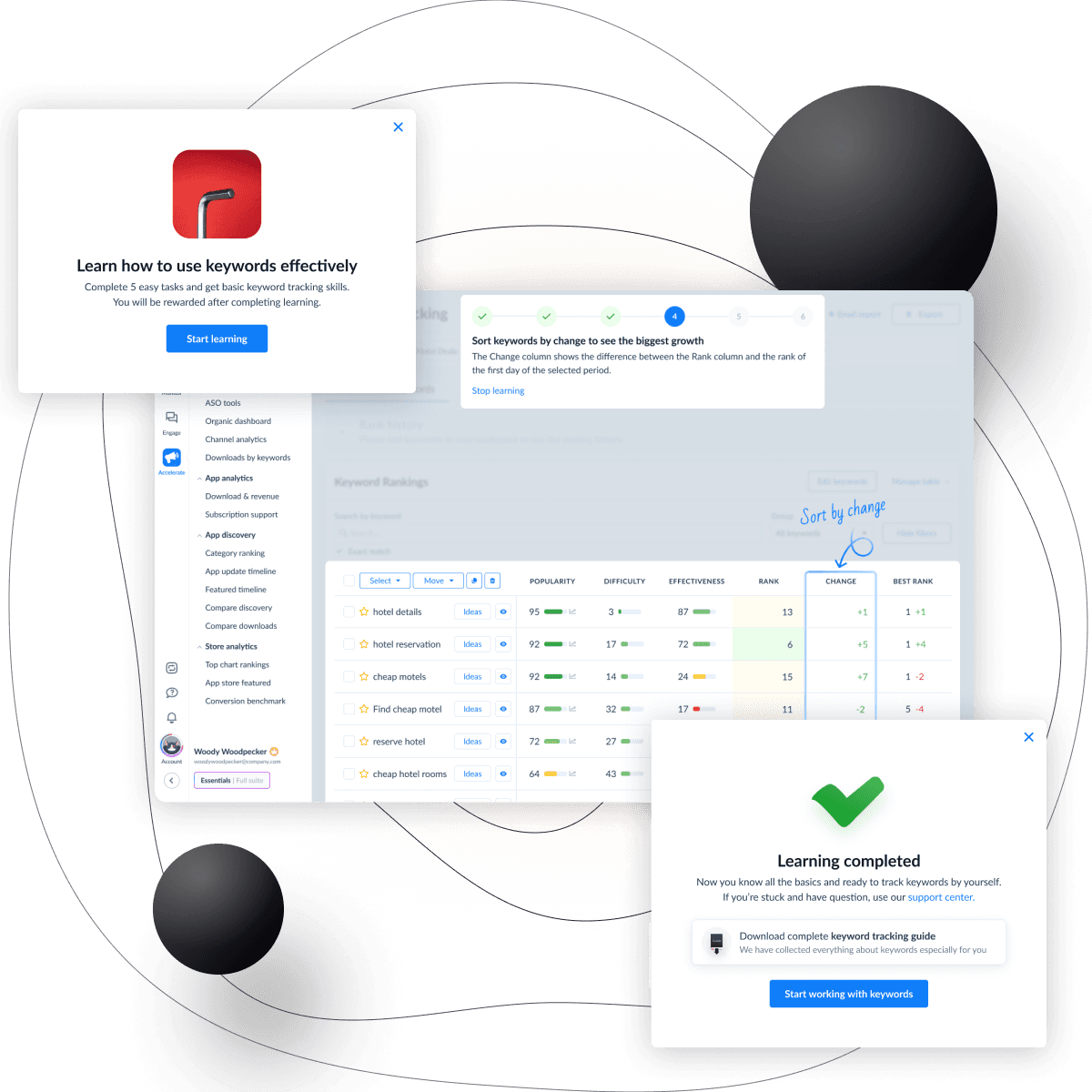
The project covered sign-up, account setup and product tours. I started with user interviews, simplified the flows and made them clearer. Every change aimed at the same two goals: conversion to paid and retention.
Sign up
I simplified the sign-up flow and added Google and Microsoft sign-up options, which improved sign-up conversion.

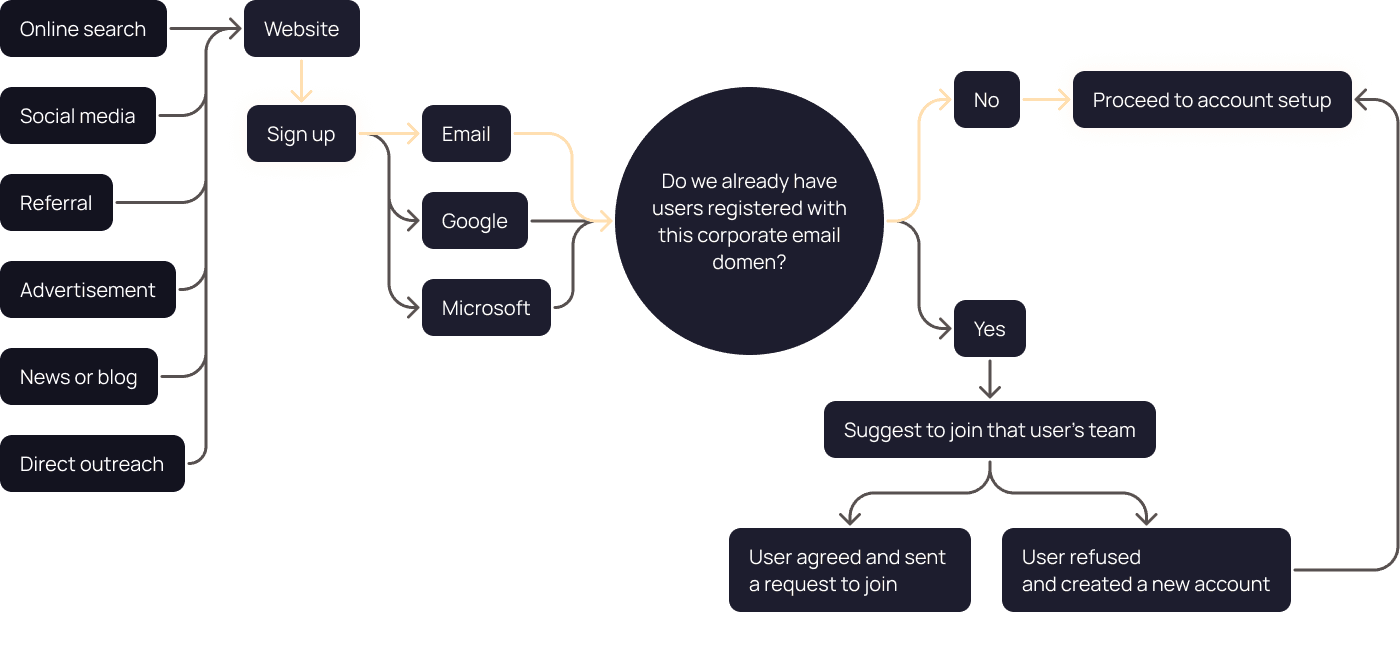
Account setup
Account setup, previously a dull technical page, became a new flow where we learn about the user to make the rest of the experience smoother. Adding a trial offer to this flow significantly raised trial activations.


Product tour